
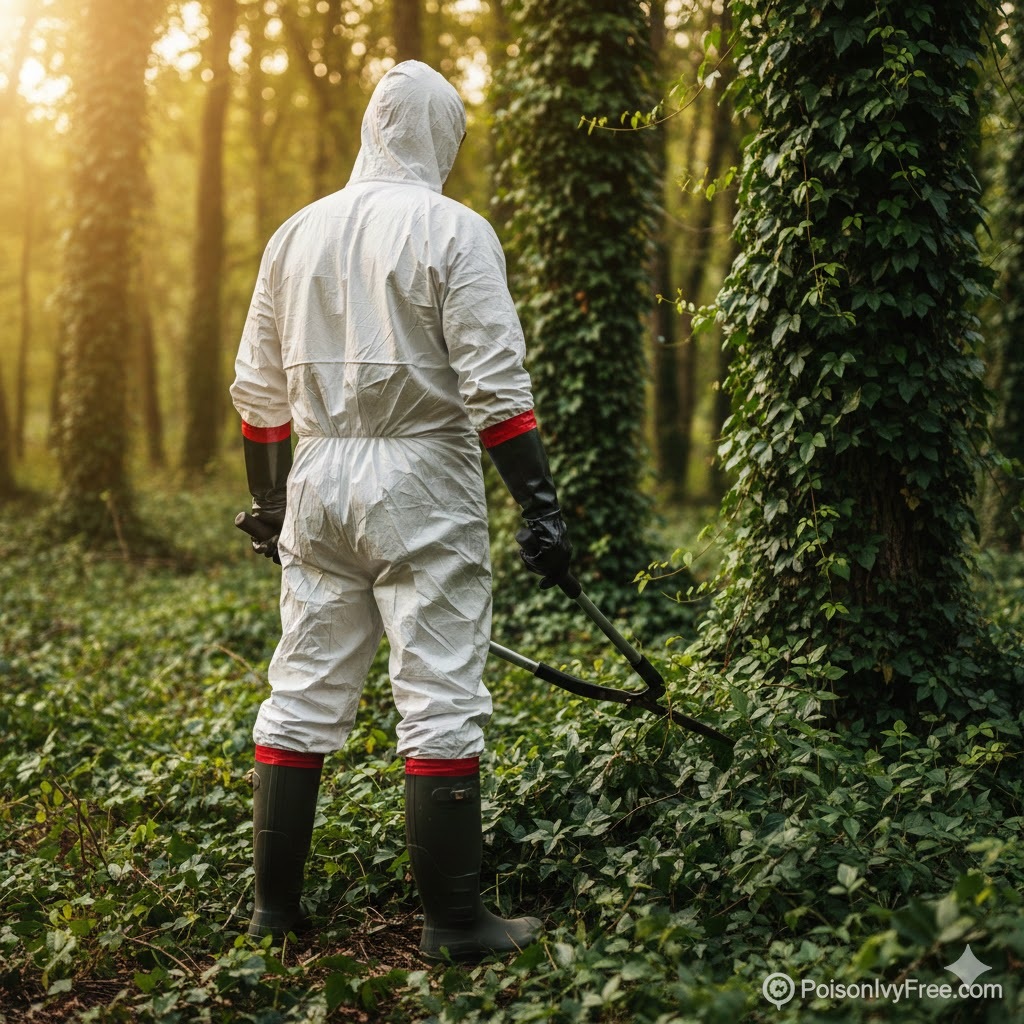
Dealing with Poison Ivy isn’t just about gardening; it is a hazardous material situation. The culprit is urushiol, an oil so potent that an amount the size of a pinhead can cause an itchy rash on 500 people. To stay itch-free, you need more than just standard gardening clothes—you need “armor.”
This guide details the specific fabrics, materials, and gear protocols necessary to create an impermeable barrier between your skin and the plant.
The Science of Protection: Permeability Matters
Before selecting gear, it is vital to understand why standard clothing fails. Urushiol is an oil. Like motor oil, it can soak through porous fabrics like cotton, linen, and standard leather.
- The Rule: If water can soak through it instantly, urushiol can soak through it eventually.
- The Goal: You want non-permeable or low-permeability materials that keep the oil on the surface, where it can be washed off or discarded.
1. Hand Protection: The Critical Barrier
Your hands are the primary point of contact. Most standard gardening gloves (cotton or leather) are dangerous because they absorb urushiol, effectively trapping the oil against your skin and contaminating everything you touch afterward.
The Best Gloves for Poison Ivy
- Heavy-Duty Nitrile or Vinyl: These are the gold standard. They are resistant to oils and acids.
- Disposable Nitrile (Double Layered): If you are doing light weeding, wear two pairs of medical-grade nitrile gloves. Strip the top pair if they get torn.
- Rubber-Dipped Gauntlets: For heavy brush clearing, look for “chemical resistant” gloves with long sleeves (gauntlets) that go up the forearm.
Glove Material Comparison Table
| Material | Permeability | Safe for Poison Ivy? | Verdict |
| Nitrile | None (Impermeable) | Yes | Best Choice. Oil sits on top. |
| Vinyl / PVC | Low | Yes | Good alternative to Nitrile. |
| Leather | High (Absorbent) | No | Avoid. Absorbs oil permanently. |
| Cotton | High (Porous) | No | Avoid. Oil soaks through instantly. |
2. Body Protection: Creating a Seal
If you are venturing into a heavy infestation, a t-shirt and shorts are a recipe for disaster.
The “Full Suit” Approach
For serious removal jobs, professional poison ivy removers use Tyvek suits.
- What is it? A disposable, non-woven polyethylene material.
- Why use it? It is breathable but resistant to liquid and solid particles.
- Cost: Inexpensive ($10-$15) and disposable.
- Pro Tip: Buy a size larger than you need so you can move freely without ripping the seams.
The “standard Clothes” Approach
If you don’t have a Tyvek suit, follow these layering rules:
- Long Sleeves and Pants: Zero exposed skin.
- Synthetic Blends: Tightly woven nylon or polyester is better than loose cotton.
- The “Tuck” Technique: Tuck pants into boots. Tuck shirt into pants. Duct tape the connection points for a complete seal.
3. Footwear: Rubber vs. Leather
Your boots are the most likely item to transfer oil back into your home.
- The Winner: Rubber Boots (Wellingtons/Muck Boots).
- Rubber can be easily washed with a hose and degreasing soap. The oil slides right off.
- The Loser: Leather Hiking Boots or Canvas Sneakers.
- Leather and canvas have grains and fibers that trap microscopic oil droplets. It is nearly impossible to fully decontaminate leather boots once they are covered in sap.
4. Barrier Creams: The Invisible Shield
If you must work in an area where gear might slip or tear, use a barrier cream as a secondary insurance policy.
- Look for: Creams containing Bentoquatam (e.g., IvyBlock).
- How it works: It dries to form a clay-like coating on the skin that physically blocks urushiol from absorbing into the pores.
- Note: This is not a substitute for gloves. It is a backup.
The “Doffing” Protocol: Removing Gear Safely
More people get a rash from taking off their gear than from the plant itself. You must assume the outside of your clothing is covered in “invisible wet paint.”
- Wash Outside First: If wearing rubber boots and gloves, rinse them with a hose while still wearing them.
- Remove Gloves Last: Peel your suit or clothes off first.
- Inside-Out Method: Peel clothes away from your body, turning them inside out as you go. This traps the oil on the “inside” of the bundle.
- The “Clean Hand” Rule: Use a gloved hand to pull off the other glove, then slip a clean finger under the wrist of the remaining glove to peel it off without touching the outside.
FAQ: Common Questions About Poison Ivy Gear
Q: Can I wash clothes exposed to poison ivy?
A: Yes, but do it carefully. Wash contaminated clothes separately from other laundry. Use the hottest water setting, a full load size (for agitation), and a heavy-duty degreasing detergent. Run the machine empty for a cycle afterward to rinse the drum.
Q: Does bleach kill poison ivy oil on clothes?
A: No. Bleach disinfects bacteria but does not neutralize urushiol oil. You need a detergent that breaks down grease/oils (surfactants).
Q: How long does the oil stay on my boots?
A: Urushiol is incredibly stable. It can remain active on footwear, garden tools, and jackets for 1 to 5 years if not washed off.