
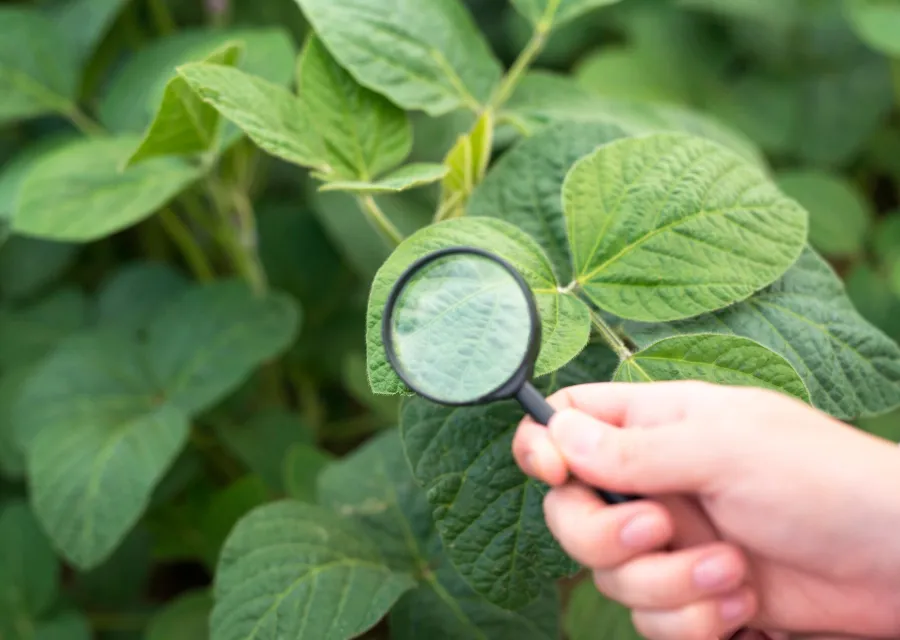
If you own a home in Connecticut, Massachusetts, or New Hampshire, you know that “leaves of three, let it be” is the golden rule of the outdoors. However, New England is home to several deceptive plants that mimic the appearance of poison ivy, leading to unnecessary panic—or worse, a false sense of security that results in a severe rash.
At Poison Ivy Free, we specialize in poison ivy identification and organic root extraction. Before you grab your gardening gloves, use this guide to distinguish between harmful vines and their harmless neighbors.
1. Virginia Creeper: The Five-Leaf Deception
Virginia Creeper is the most common plant mistaken for poison ivy in Fairfield County and beyond.
- The Difference: While both are climbing vines, Virginia Creeper typically has five leaflets radiating from a single point.
- The Overlap: Young Virginia Creeper plants can sometimes sprout only three leaves, making them nearly identical to poison ivy. Look for the “serrated” or saw-toothed edges; Virginia Creeper is usually more jagged than poison ivy.
2. Box Elder Seedlings: The “Tricky Three”
Box Elder maple seedlings are notorious for their “leaves of three” arrangement.
- The Difference: Look at the stems. On a Box Elder, the leaves are symmetrical—they grow directly opposite each other on the branch. Poison ivy leaves grow in an alternate pattern (staggered along the stem).
- The Texture: Box Elder leaves are often a lighter, matte green, whereas poison ivy often has a waxy, urushiol-rich sheen.
3. Black Raspberry and Brambles
If it has thorns, it isn’t poison ivy.
- The Difference: Poison ivy vines are “hairy” but never thorny. If the stem of the plant has prickles or thorns, you are likely looking at a wild raspberry or blackberry bush.
- The Underside: Flip the leaf over. Raspberry leaves are often silvery or white underneath, while poison ivy is consistently green.
4. Poison Sumac vs. Staghorn Sumac
In the wetlands of the Hudson Valley and Litchfield County, homeowners often fear they have Poison Sumac.
- The Difference: Staghorn Sumac has “fuzzy” red berries and serrated leaves. Poison Sumac has smooth-edged leaves and hanging white or grey berries.
- The Habitat: Poison Sumac almost exclusively grows in very wet, swampy soil, while common Sumac grows in dry, sunny areas.
5. Why “Hairy” Vines Matter in Winter
Even in the dormant season, New England backyards are dangerous. If you see a thick, “hairy” vine climbing an oak or maple tree, stay away. These aerial root hairs are a primary sign of an established poison ivy vine. Even without leaves, the eradication of these vines requires professional care because the urushiol oil is still active in the bark and roots.
Still Unsure? Get a Free Expert ID
Identifying invasive plants can be stressful, especially when your family’s safety is on the line. At Poison Ivy Free, we offer a Free Poison Ivy Identification service.
Don’t guess—be sure. Simply send us a clear photo of the plant or call us at (860) 209-6000. If it is poison ivy, our veteran-owned team will provide a guaranteed, chemical-free plan for eradication that keeps your pets and kids safe all summer long.