
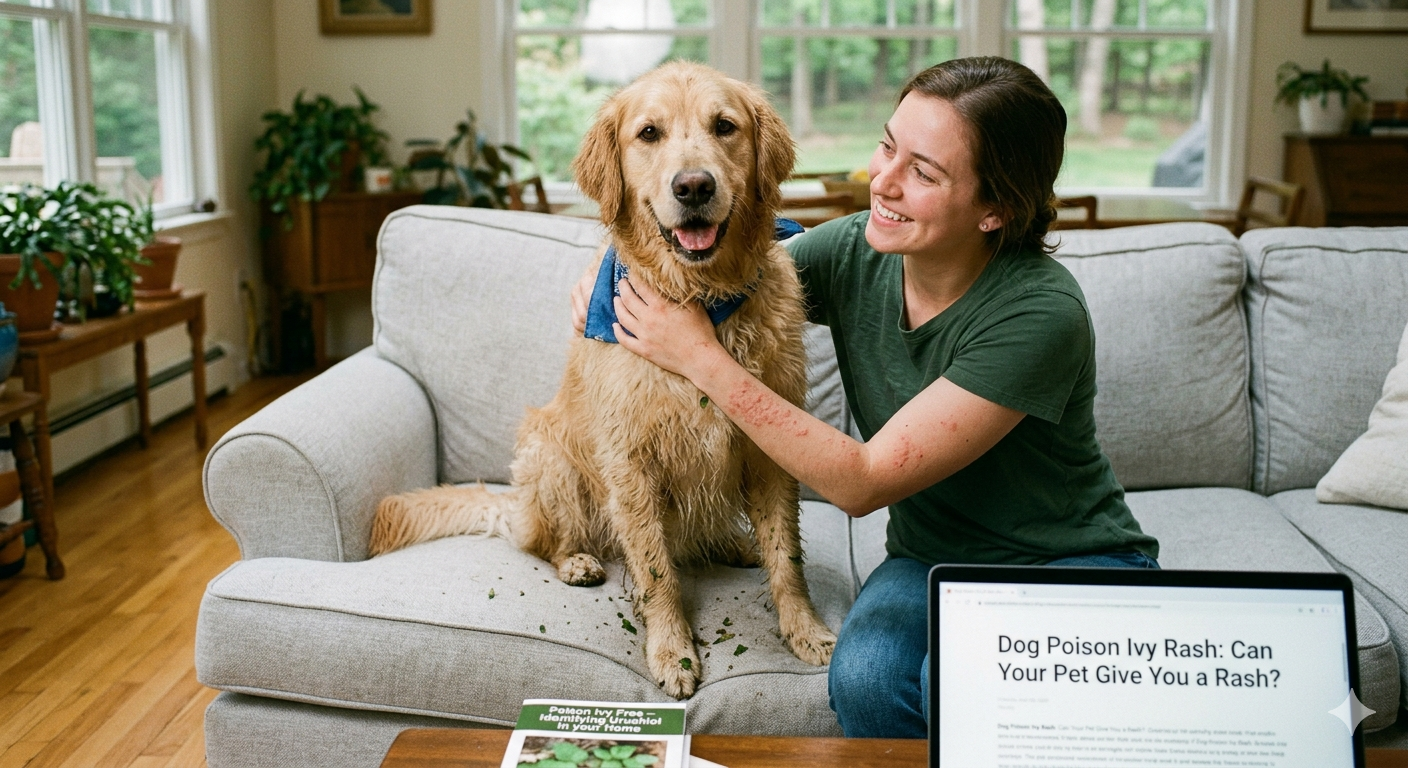
For dog owners in Connecticut and New York, a walk through the woods or a game of fetch in the backyard is the highlight of the day. However, those lush green trails often hide a microscopic threat that can turn a fun afternoon into weeks of misery for your family. One of the most common questions we hear is: can dogs get poison ivy?
The short answer is yes, but the real danger isn’t to the dog; it is to you. Understanding how your pet acts as a silent carrier for urushiol is the key to keeping your home a safe, itch-free zone.
The Silent Carrier: Poison Ivy on Dog Fur
While humans have a nearly universal allergic reaction to poison ivy, most dogs are protected by their thick coats of fur. Their skin rarely comes into direct contact with the plant. However, as your dog runs through a patch of vines, the urushiol oil on pets acts like a magnet.
Urushiol is the potent, sticky resin found in every part of the poison ivy plant. It does not dry out easily and can remain active on surfaces for months or even years. When your dog brushes against those “leaves of three,” the oil hitches a ride on their fur.
Why Secondary Contact is a Major Risk
The danger of secondary contact is that you don’t even have to step outside to get a rash. If your pet has poison ivy oil on their coat, they can transfer it to:
- Your hands during a belly rub.
- Your sofa or bed sheets where they sleep.
- Your children as they play on the floor.
- Collars, leashes, and grooming brushes.
This is often why homeowners experience recurring rashes even after they think they have avoided the woods. The oil is living inside the house, trapped in the fibers of your furniture and your pet’s hair.
Dog Poison Ivy Treatment: What to Do If Your Pet Is Exposed
If you suspect your dog has run through a patch of poison ivy, immediate action is required to prevent the oil from spreading through your home.
- Wear Protection: Put on heavy-duty rubber gloves and long sleeves before handling your pet.
- The Degreasing Bath: Use a specialized grease-cutting shampoo or a dedicated urushiol-removing soap. Standard pet shampoos may not be strong enough to break down the sticky resin.
- Cool Water: Use cool water for the bath, as warm water can open pores and increase the slight risk of the dog developing a skin irritation.
- Clean the Gear: Any towels used to dry the dog, as well as their collar and leash, must be washed in hot water with heavy-duty detergent.
While actual skin reactions in pets are rare, if you notice your dog excessively scratching or developing red bumps on their stomach, consult your vet for a professional dog poison ivy treatment plan.
Protect Your Property with Poison Ivy Free
You shouldn’t have to keep your dog on a short leash in your own backyard. If you are worried about the hidden vines on your property, our team of experts provides guaranteed poison ivy identification and complete eradication services.
We serve residential and commercial clients across New England, ensuring that your yard is a safe place for both two-legged and four-legged family members. Don’t wait for a rash to tell you there is a problem.
Stop the cycle of secondary contact. Contact Poison Ivy Free today for a professional inspection and let us help you reclaim your yard from the threat of urushiol.