
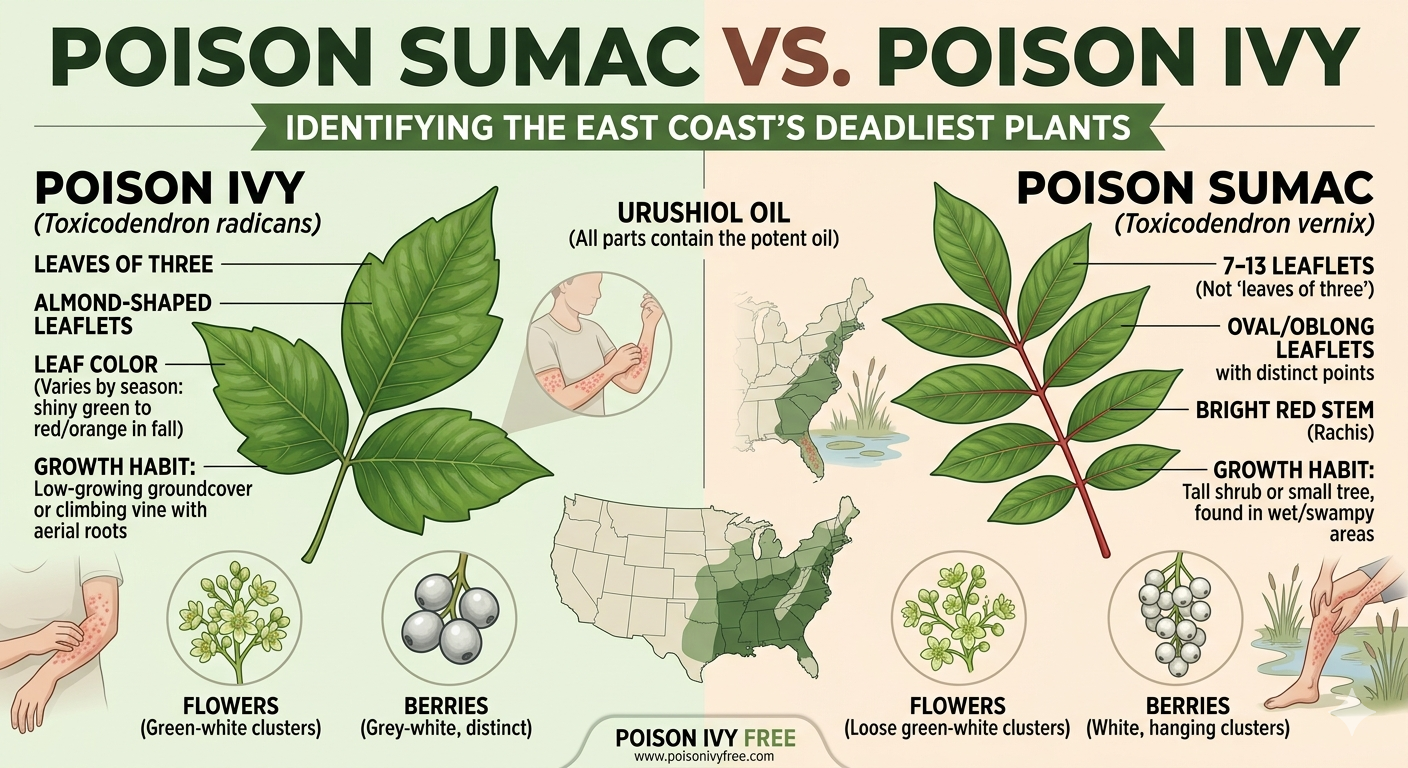
If you spend time outdoors in the Northeast, chances are you have heard the phrase “leaves of three, let it be.” While that advice helps identify poison ivy, it does not cover one of the most toxic plants found on the East Coast: poison sumac.
Both plants can cause severe skin reactions, and misidentifying them can lead to painful exposure. Knowing the difference between poison sumac vs. poison ivy is essential for protecting your family, pets, and property.
At Poison Ivy Free, we help homeowners safely identify, remove, and prevent the spread of toxic plants with professional solutions that eliminate risk at the source.
Why These Plants Are So Dangerous
Both poison ivy and poison sumac contain an oil called urushiol, which causes an allergic skin reaction in most people.
Contact with this oil can lead to:
- Intense itching
- Red rashes
- Blistering skin
- Swelling
- Long-lasting irritation
Urushiol can also spread easily through:
- Clothing
- Tools
- Pet fur
- Yard debris
Because even small exposure can cause a reaction, proper identification and removal are critical.
If you suspect toxic plants on your property, Poison Ivy Free provides professional poison ivy removal services to eliminate the risk safely.
What Is Poison Ivy?
Poison ivy is the most common toxic plant found across the East Coast. It can grow as a vine, shrub, or ground cover, making it highly adaptable and difficult to control.
Key Identification Features:
- Clusters of three leaves
- Leaves may be glossy or dull
- Can appear green in summer and red or orange in fall
- Often grows along fences, trees, and edges
Poison ivy thrives in:
- Wooded areas
- Backyards
- Fence lines
- Overgrown landscapes
Because it spreads easily, it can quickly take over unmanaged areas of your property.
What Is Poison Sumac?
Poison sumac is less common than poison ivy but significantly more potent. It is typically found in wet, swampy environments rather than dry landscapes.
Key Identification Features:
- 7 to 13 smooth-edged leaflets per stem
- Leaves arranged in pairs with a single leaf at the tip
- Reddish stems
- Grows as a tall shrub or small tree
- Produces pale green or white berries
Poison sumac is commonly found in:
- Wetlands
- Marshy areas
- Pond edges
- Poorly drained soil
Because of its higher urushiol concentration, contact with poison sumac often causes more severe reactions than poison ivy.
If you believe poison sumac is present on your property, professional removal from Poison Ivy Free is the safest solution.
Poison Sumac vs. Poison Ivy: Key Differences
Understanding the differences between these plants helps prevent accidental exposure.
Leaf Structure
- Poison Ivy: Groups of three leaves
- Poison Sumac: 7–13 leaflets arranged along a stem
Growing Environment
- Poison Ivy: Dry areas, forests, yards, and edges
- Poison Sumac: Wet, swampy, or marshy environments
Growth Pattern
- Poison Ivy: Vine or low shrub
- Poison Sumac: Tall shrub or small tree
Toxicity Level
- Both are dangerous, but poison sumac often causes more severe reactions due to higher toxin concentration
If you are unsure which plant you are dealing with, avoid contact and seek professional identification.
Why DIY Removal Is Risky
Many homeowners attempt to remove poison ivy or poison sumac on their own, but this can increase exposure risk.
Common mistakes include:
- Pulling plants without protective gear
- Burning plant material, which releases toxic smoke
- Using improper disposal methods
- Spreading oils through tools and clothing
Even dead plants can still contain urushiol, making them dangerous to handle.
Professional removal ensures:
- Safe handling
- Complete root removal
- Proper disposal
- Reduced regrowth
At Poison Ivy Free, we use proven methods to eliminate toxic plants while minimizing exposure risk.
How These Plants Spread on Your Property
Both poison ivy and poison sumac spread quickly if left untreated.
They can expand through:
- Root systems
- Seeds carried by birds
- Vines attaching to trees and structures
Once established, they can become difficult to control without professional help.
Routine inspections and early removal are key to preventing widespread growth.
Protecting Your Family and Pets
Children and pets are especially vulnerable to exposure because they spend more time in outdoor areas.
Pets can carry urushiol on their fur, transferring it to:
- Furniture
- Carpets
- Skin
Creating a safe outdoor space requires identifying and removing toxic plants before they become a hazard.
Professional removal services help ensure your yard is safe for everyday use.
When to Call a Professional
If you notice suspicious plants on your property, it is best to avoid contact and call a professional.
You should consider expert removal if:
- Plants are spreading quickly
- You are unsure of identification
- The plants are in high-traffic areas
- Previous removal attempts failed
Searching for safe and reliable solutions is the best way to protect your property.
At Poison Ivy Free, we specialize in identifying and removing toxic plants so homeowners can enjoy their outdoor spaces without risk.
Safe, Effective Removal with Poison Ivy Free
Understanding the difference between poison sumac vs. poison ivy is the first step in preventing exposure. Both plants are hazardous, and both require careful handling to remove safely.
At Poison Ivy Free, we provide expert identification, removal, and prevention services designed to eliminate toxic plants at the source.
Visit Poison Ivy Free today to schedule a consultation and take the first step toward a safer, poison-free property.