
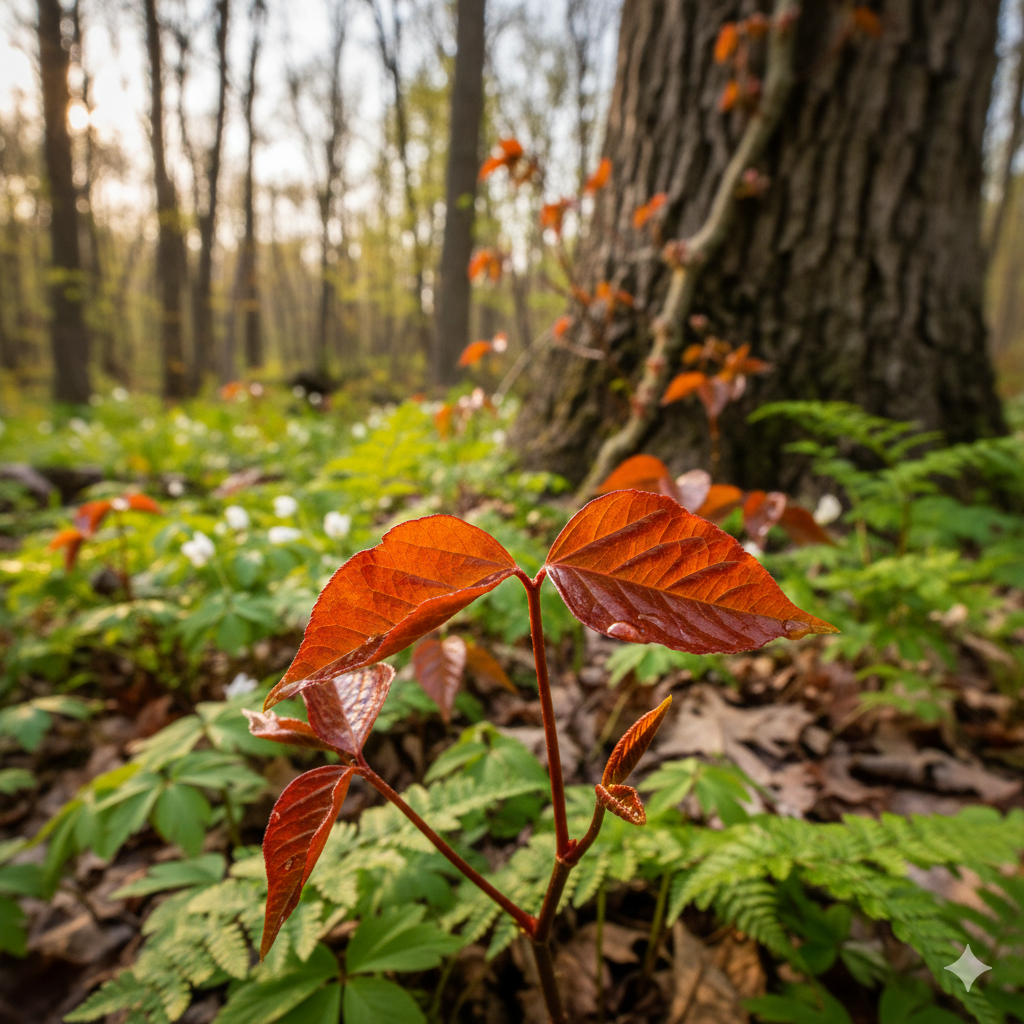
Spring is the season of fresh growth—but unfortunately, that includes poison ivy. As temperatures rise and soil moisture increases, poison ivy enters its most aggressive growth phase. What starts as a few small leaves in early spring can quickly turn into a widespread, hazardous problem by summer.
Understanding spring poison ivy growth and acting early can save you from painful rashes, property damage, and costly removal later in the year.
Why Poison Ivy Thrives in Spring
Poison ivy is a fast-spreading invasive plant that becomes active as soon as spring conditions arrive. Warmer temperatures, increased rainfall, and longer daylight hours create the perfect environment for rapid growth.
In spring, poison ivy:
- Produces new leaves and vines
- Expands underground root systems
- Spreads across lawns, gardens, fences, and trees
- Becomes harder to control as the season progresses
What Does Poison Ivy Look Like in Spring?
Early spring poison ivy often appears harmless, which is why it’s frequently ignored. Young plants typically have:
- Bright green leaves
- Thin, flexible vines
- Smaller leaf clusters that are easy to miss
Even at this early stage, the plant already contains urushiol oil, the compound responsible for painful allergic reactions.
Why Early Poison Ivy Removal Is So Important
The biggest mistake homeowners make is waiting too long. Early poison ivy removal is far more effective than dealing with mature growth later in the season.
Benefits of removing poison ivy in spring:
- Easier access to exposed vines and roots
- Less extensive root systems
- Lower removal costs
- Reduced risk of poison ivy rash
- Prevents summer regrowth and spreading
Once poison ivy matures, it becomes tougher, more established, and far more dangerous to remove.
The Health Risks of Spring Poison Ivy Exposure
Many people assume poison ivy is only a summer problem, but spring exposure is just as dangerous. Even brushing against young leaves can cause a severe reaction.
Health risks include:
- Itchy, blistering poison ivy rash
- Swelling and inflammation
- Infection from excessive scratching
- Severe reactions requiring medical treatment
Why DIY Poison Ivy Removal Often Fails in Spring
Spring growth can give homeowners a false sense of control. Pulling vines or spraying store-bought products may seem effective at first—but poison ivy almost always returns if roots aren’t properly treated.
Common DIY mistakes include:
- Only removing visible leaves
- Using ineffective herbicides
- Accidentally spreading urushiol oil
- Triggering regrowth from underground roots
Professional Poison Ivy Removal: The Smart Spring Solution
Professional poison ivy removal focuses on permanent control, not temporary relief. Experts identify all growth areas and treat both surface vines and underground root systems.
At Poison Ivy Free, spring removal services are designed to:
- Eliminate poison ivy at the root
- Prevent regrowth during peak summer months
- Reduce exposure risks for families and pets
- Protect trees, lawns, and landscaping
Why Spring Is the Best Time to Stop Poison Ivy for Good
Removing poison ivy early in the season interrupts its growth cycle. Instead of fighting aggressive vines all summer, you stop the problem before it spreads.
Spring removal means:
- Fewer treatments needed
- Lower long-term costs
- A safer, poison ivy-free property all season
Don’t Let Poison Ivy Take Over This Spring
If you’ve spotted poison ivy on your property, now is the time to act. Waiting allows the plant to spread, strengthens its root system, and increases health risks.
Contact Poison Ivy Free today for professional poison ivy removal and protect your property before peak growing season begins.